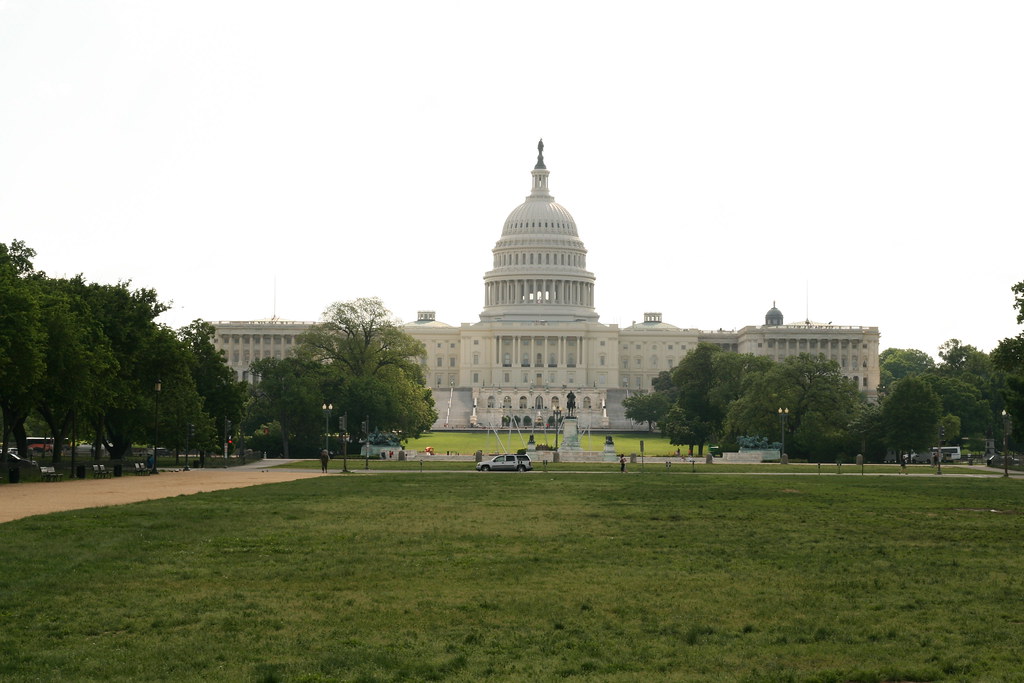
The civics-class version of "how a bill becomes a law" is roughly correct but skips most of the parts where bills actually live or die. In practice, the path is longer and more procedural — and understanding it explains why a popular idea can sit in Congress for years without a vote, while another moves in days.
This article describes the standard federal legislative process: how a bill is introduced, what happens in committee, how floor consideration differs between the House and Senate, how the two chambers reconcile their versions, and what the president can do at the end.
Introduction and referral
Only a member of the House or Senate can formally introduce a bill, though the text may have been drafted by anyone — congressional staff, the executive branch, advocacy groups, or constituents. Once introduced, the bill is assigned a number (H.R. ### in the House, S. ### in the Senate) and referred to one or more committees with jurisdiction over the subject.
The vast majority of bills die in committee without any action. According to the Congressional Research Service, fewer than 5% of introduced bills become law in a typical Congress.
Committee consideration
Committees are where bills are studied, amended, and either advanced or quietly shelved. A committee may hold hearings with expert witnesses, request reports from the Government Accountability Office or Congressional Budget Office, and "mark up" the text — amending it line by line before voting on whether to report it favorably to the full chamber.
If a committee declines to act, the bill effectively stops there for that session of Congress. Procedural workarounds exist (discharge petitions in the House, motions to discharge in the Senate) but are rarely successful.
Floor consideration: House vs Senate
Once reported, the bill heads to the floor — but the two chambers handle this very differently. In the House, the Rules Committee sets the terms of debate (time limits, which amendments are in order). Debate is usually short, amendments are restricted, and a simple majority vote passes the bill.
The Senate has no equivalent. Debate is generally unlimited, which is why the filibuster matters: ending debate requires 60 votes to invoke cloture under Senate Rule XXII. That effectively means most major legislation needs 60-senator support to pass, even though the actual vote requires only a simple majority. A specific procedure called budget reconciliation lets certain spending and tax bills bypass the 60-vote threshold, which is why so much consequential policy moves through it.
Resolving differences between the chambers
For a bill to reach the president, the House and Senate must pass identical text. If their versions differ, one chamber can accept the other's amendments, or the two can form a conference committee — a temporary panel of members from both chambers — to negotiate a compromise. The conference report then goes back to each chamber for a single up-or-down vote (no amendments).
In recent decades, formal conferences have become less common; informal "ping-pong" between the chambers, where each amends the other's text, is now more typical.
The president's options
Once both chambers pass identical text, the bill is enrolled and sent to the president. The president has 10 days (excluding Sundays) to sign it, veto it, or do nothing. If signed, it becomes law. If vetoed, it returns to Congress with the president's objections; both chambers can override by a two-thirds vote.
If the president takes no action and Congress is in session, the bill becomes law after 10 days. If Congress has adjourned and the president takes no action, the bill fails — a "pocket veto" — and there is no opportunity to override.
After it becomes law
A statute doesn't run itself. Most laws delegate implementation to a federal agency, which then writes regulations through a formal rulemaking process governed by the Administrative Procedure Act. Those regulations — published in the Code of Federal Regulations — are often where the practical effect of a law is determined, and they can be challenged in court.
Congress also retains tools to revisit a law: appropriations (a law without funding can be hollow), oversight hearings, and amending or repealing statutes outright.