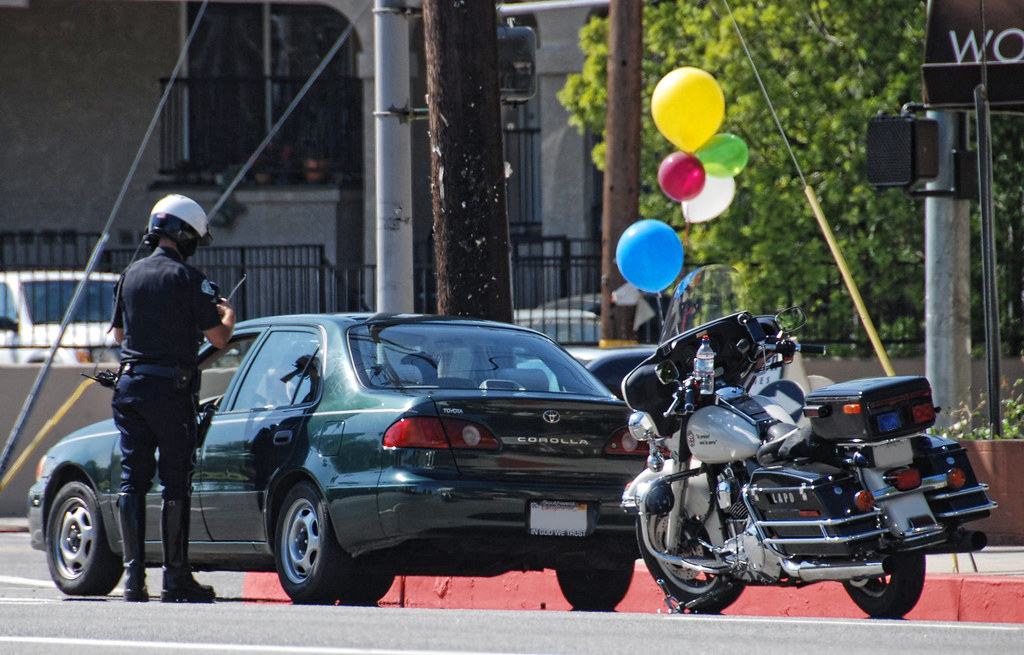
Traffic stops are the most common interaction between Americans and police, and the rules around them are not improvised — they are shaped by decades of Supreme Court decisions. Knowing what those rules say helps drivers stay calm, comply where required, and decline politely where the law allows.
This article is informational, not legal advice. State laws vary, and an attorney should be consulted for specific situations. The framework below applies to ordinary federal constitutional protections that apply nationwide.
Why you were stopped
Under the Fourth Amendment, a traffic stop requires reasonable suspicion of a traffic violation or other crime. The Supreme Court has held that the actual subjective motive of the officer doesn't invalidate a stop if there's an objective traffic-law basis for it (Whren v. United States, 1996). In plain terms, an officer who sees you drift over the line has a lawful basis to pull you over.
You can ask why you were stopped, and many states (and many police departments' own policies) require an officer to provide a reason. Asking is not a confrontation; it's a normal question.
What you must do, and what you don't have to do
In every state, drivers must produce a valid driver's license, vehicle registration, and proof of insurance when asked at a traffic stop. Most states also have "stop and identify" rules that allow officers to require identification during a lawful stop. The ACLU recommends keeping these documents accessible and telling the officer where you are reaching before reaching.
Beyond identification, you generally have the right to remain silent about anything else — where you were going, where you've been, whether you've had anything to drink. You don't have to lie; you can simply say you'd prefer not to answer questions without an attorney. The Fifth Amendment protection against self-incrimination applies during routine stops.
- Keep hands visible, ideally on the steering wheel
- Announce before reaching for documents or moving
- Produce license, registration, and insurance when asked
- You may decline to answer questions beyond identification
Searches: when consent matters
An officer needs probable cause, a warrant, or a recognized exception (such as plain view of contraband, or a search incident to a lawful arrest) to search your vehicle. They can also search if you consent. You are not required to consent, and you can decline by saying clearly: "Officer, I do not consent to a search." Saying this is not a sign of guilt; it preserves your rights if the search is later challenged.
If an officer searches anyway, do not physically resist. Make the objection verbal, comply with instructions, and address the legality afterward through an attorney or a complaint. The Supreme Court has repeatedly held that resisting an unlawful search is not a remedy; the courts are.
Recording the stop
Federal courts of appeals have broadly recognized a First Amendment right to record police performing their duties in public, subject to reasonable time, place, and manner restrictions. Most states allow recording in public without all-party consent for video; audio rules vary by state.
As a practical matter, keep the phone visible, announce that you're recording, and don't reach for it suddenly. Recording is a right; how you exercise it matters for everyone's safety.
If you're asked to step out, or if you're arrested
Pennsylvania v. Mimms (1977) allows officers to order a driver out of a vehicle during a lawful stop. Comply with that order; refusing is itself a crime in most jurisdictions. If you're arrested, you have the right to remain silent and the right to an attorney. State both clearly and stop talking until counsel is present.
If a search of your person or vehicle follows a lawful arrest, that search is generally permitted under existing case law. The time to challenge it is later, with an attorney, not at the roadside.
Afterward
If you believe your rights were violated, write down everything you remember as soon as it's safe: time, location, officer name and badge number, agency, what was said, names of any witnesses. File a complaint with the relevant agency, and consult an attorney. The ACLU and many state bar associations offer guidance on next steps.